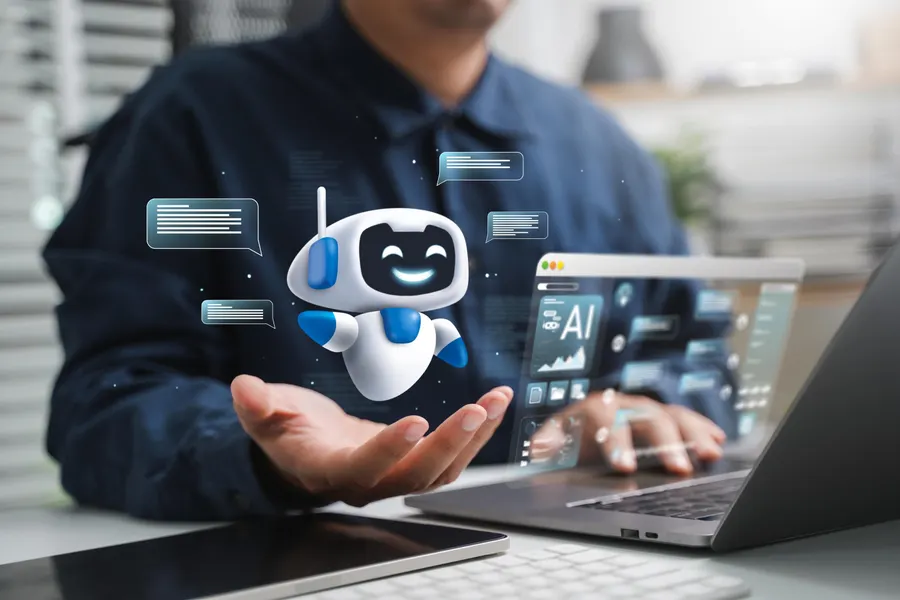
The marketing industry is entering a new era where artificial intelligence is moving beyond simple automation and becoming an active decision-making partner. In 2026, autonomous AI agents are transforming how businesses plan campaigns, analyze customer behaviour, manage workflows, and optimize marketing performance. Unlike traditional automation tools that follow predefined rules, AI agents can understand goals, analyze information, make decisions, and complete complex tasks with minimal human intervention.
Businesses are increasingly adopting autonomous AI agents to improve efficiency, reduce repetitive work, and create more personalized customer experiences. These intelligent systems are helping marketing teams shift their focus from manual execution toward strategy, creativity, and business growth.
What Are Autonomous AI Agents in Marketing?
Autonomous AI agents are advanced AI systems designed to perform tasks independently by combining machine learning, large language models, data analysis, and workflow automation. Instead of waiting for a human command for every step, AI agents can analyze objectives, decide the next action, execute tasks, and continuously improve results.
In marketing operations, these agents can support activities such as:
- Campaign planning
- Customer research
- Content optimization
- Lead qualification
- Advertising management
- Performance analysis
- Customer engagement
Modern AI agents are becoming part of marketing teams by assisting with both operational and strategic activities.
How AI Agents Improve Marketing Efficiency
One of the biggest benefits of autonomous AI agents is their ability to automate repetitive marketing tasks. Traditional marketing operations often require teams to manually collect data, prepare reports, monitor campaigns, and update customer information.
AI agents can perform these activities continuously without requiring constant human involvement. They can monitor marketing channels, identify performance changes, and recommend improvements automatically.
For example, an AI marketing agent can analyze advertising results, detect declining campaign performance, suggest budget adjustments, and create optimization recommendations.
This allows marketing teams to spend more time developing strategies instead of managing repetitive processes.
AI Agents and Automated Campaign Management
Campaign management is becoming more intelligent with autonomous AI technology. Instead of manually adjusting campaigns based on weekly reports, businesses can use AI agents that continuously monitor performance and make real-time improvements.
AI agents can help optimize:
- Advertising budgets
- Audience targeting
- Content variations
- Customer segments
- Campaign timing
- Conversion opportunities
These systems analyze large amounts of data and identify patterns that human teams may miss. Research suggests that agentic AI workflows can significantly improve marketing speed and enable continuous campaign optimization.
Personalized Customer Experiences Through AI Agents
Customer expectations for personalization continue to increase. Businesses need to deliver relevant messages, offers, and experiences based on individual customer behaviour.
Autonomous AI agents help achieve this by analyzing:
- Customer browsing behaviour
- Purchase history
- Engagement patterns
- Search activity
- Previous interactions
Based on this information, AI agents can create personalized customer journeys, recommend products, and deliver targeted communication at the right moment.
This improves customer satisfaction while increasing conversion opportunities.
AI Agents for Lead Generation and Sales Growth
Lead generation is another area where autonomous AI agents are creating significant improvements. Traditional lead management often requires sales teams to manually review inquiries, qualify prospects, and follow up.
AI agents can automatically:
- Analyze incoming leads
- Identify high-value prospects
- Update CRM records
- Schedule follow-ups
- Recommend sales actions
This creates faster response times and helps sales teams focus on leads with higher conversion potential.
By connecting AI agents with CRM systems and marketing platforms, businesses can create intelligent sales pipelines that operate continuously.
The Role of AI Agents in Content Marketing
Content marketing is also being transformed by autonomous AI systems. AI agents can support the complete content workflow, including research, topic discovery, optimization, and performance tracking.
They can analyze:
- Search trends
- Competitor content
- Customer questions
- Keyword opportunities
- Content performance
This enables businesses to create more relevant content strategies and improve their visibility across search engines and AI-powered platforms.
However, human creativity and expertise remain essential for maintaining brand voice, originality, and strategic direction.
AI Agents and Data-Driven Marketing Decisions
Modern marketing generates enormous amounts of data from websites, advertisements, social media platforms, and customer interactions. Turning this information into actionable insights can be challenging.
Autonomous AI agents solve this problem by analyzing data in real time and providing recommendations.
Businesses can use AI agents to understand:
- Which campaigns generate the best results
- Which customers are most valuable
- Which channels produce higher ROI
- Which marketing strategies need improvement
This enables faster and more accurate decision-making.
The Shift Toward Agentic Marketing Operations
The future of marketing is moving toward agentic systems where AI agents work alongside human teams. Instead of replacing marketers, these systems are becoming intelligent assistants that handle execution while humans focus on creativity, strategy, and leadership.
Industry research suggests that agentic AI could transform a significant portion of marketing activities by enabling automated content creation, audience analysis, campaign optimization, and personalized experiences.
Companies that successfully adopt AI agents will create faster, more adaptive marketing operations.
Challenges of Using Autonomous AI Agents
Although AI agents provide significant advantages, businesses must implement them carefully. Important considerations include:
- Data privacy and security
- Human oversight
- Brand consistency
- AI accuracy
- Integration with existing systems
The most effective approach combines AI automation with human decision-making. AI should support marketers rather than completely replace strategic judgment.
How QSSols Helps Businesses Implement AI Marketing Automation
Businesses looking to modernize their marketing operations can use AI-powered solutions to automate workflows, improve customer engagement, and increase marketing efficiency.
QSSols provides advanced digital solutions including:
AI Automation Services: https://qssols.com/ai-automation-services/
AI Chatbot Development: https:/qssols.com/ai-chatbot-development/
Google Ads Services: https://qssols.com/google-ads/
Web Design & Development: https://qssols.com/web-design-development/
These solutions help businesses build intelligent marketing systems powered by automation, AI, and data-driven strategies.
Conclusion
Autonomous AI agents are changing business marketing operations by introducing faster decision-making, intelligent automation, and personalized customer experiences. From campaign optimization and lead generation to content strategy and analytics, AI agents are helping businesses operate more efficiently and competitively.
In 2026, companies that integrate autonomous AI agents into their marketing strategies will gain a major advantage by improving productivity, reducing operational costs, and delivering better customer experiences. The future of marketing will belong to businesses that successfully combine human creativity with AI-powered intelligence.